11 Dec 2025
From the outside, it all looks simple: you make a logo, pick colors, and choose a font—and voilà, there you have it, a brand. But that’s not the face of the brand, just a name and signature with traces of its DNA. What you see is what you get, and that’s it :) What constitutes […]
Reading time 4 min
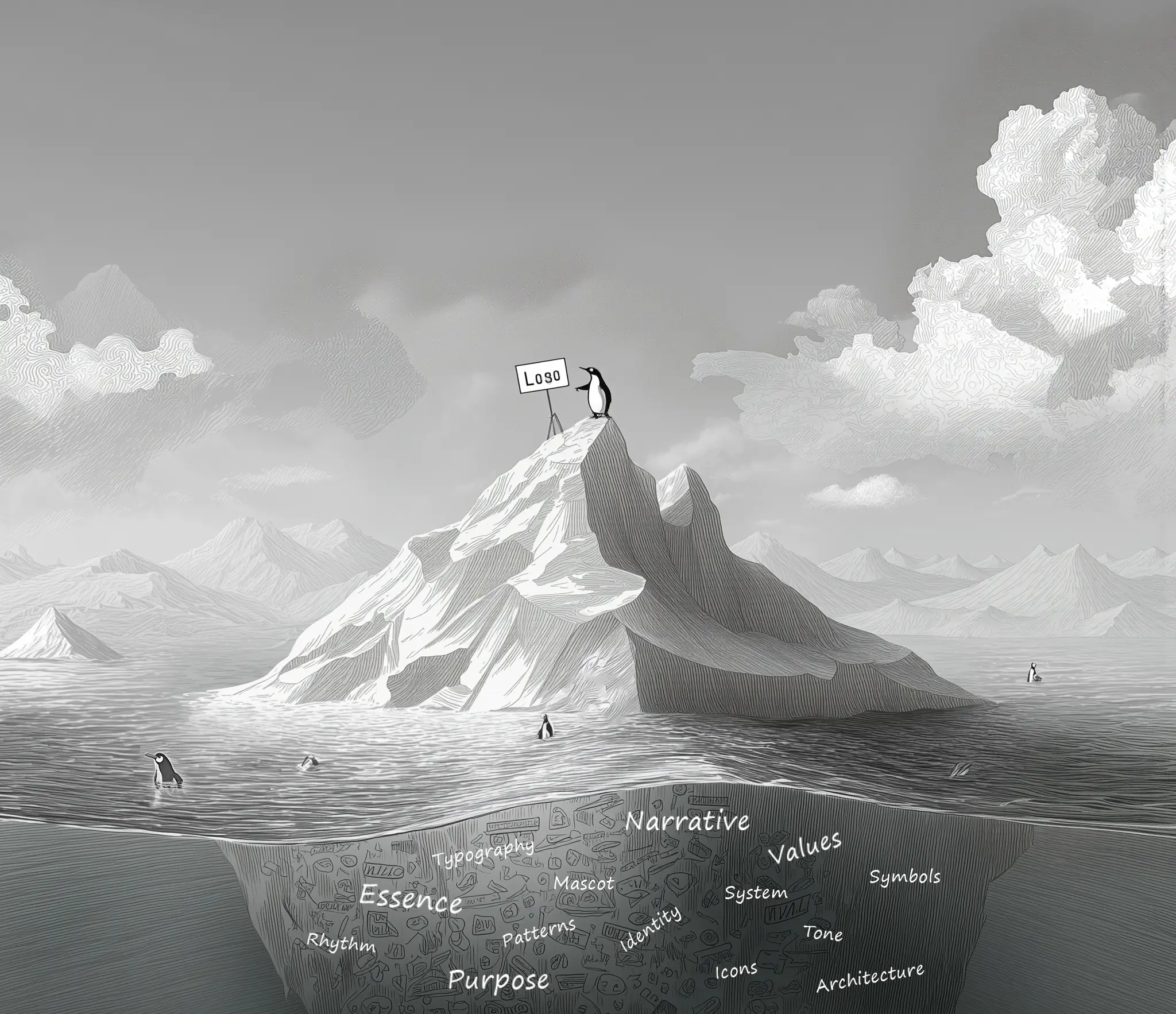
From the outside, it all looks simple: you make a logo, pick colors, and choose a font—and voilà, there you have it, a brand. But that’s not the face of the brand, just a name and signature with traces of its DNA. What you see is what you get, and that’s it :)
What constitutes a “brand” lives beneath the surface—in how you think, what you experience, how you act, and how you live your experience in communicating with the world. That is where the depth of uniqueness is formed, which can be realized and resonated with.
0. Meaning: what remains after the words
Strong brands resonate. Emotionally intelligent design combines functionality and feeling. It helps people understand what you do and feel why it matters.
Meaning works as an anchor, a filter, and an amplifier all at once. It attracts those who share your principles and naturally repels those who are not on the same wavelength. People may forget the text on a website or the plot of a video, but they always remember the emotions your brand evoked in them. When they feel something, they get involved, trust, and come back.
1. Strategy – decisions that determine behavior and shape the projection of the future
Strategy is a coordinate system in which you make decisions, from pricing to tone of voice. Everything to reach your goal in a turbulent environment.
And if there is an answer to the fundamental question “Why do we exist at all?”, then every action makes sense. But if there isn’t, the brand can only react to the market instead of shaping it.
2. Identity as a reflection of who you are
Identity is often perceived as a visual dress code, but in reality, it is your brand’s way of thinking.
It is not born when a designer chooses a color, but when the team realizes what kind of experience they want to create for people. Then colors, typography, and shapes become more than just decor and carry meaning. And the brand begins to speak not just “beautifully,” but clearly and tangibly.Because people recognize both the logo and the feeling that remains after interaction.
3. Experience is the brand.
Advertising can promise, but only experience can confirm.
It is born in the details, in the speed of support response, in the wording on buttons, and in how you say “thank you.”
This is not “service,” but the living behavior of the brand, its intonation in reality. And it is this that creates trust. This experience can be ordinary, or it can be meaningful. Because when you interact with a brand, you become part of its idea and what stands behind it. When a brand has a position, a mission, values, your every action becomes part of this story. You support it through your choices, attention, and participation — and this is what turns a simple interaction into a meaningful experience filled with the brand’s meaning.
4. Brand marketing is not just a sales tool
Strong brands create a context in which they naturally stand out. Often, their marketing does not shout but resonates in sync with their audience.
Therefore, the main goal of brand marketing is to form a meaning that people resonate with, share, and carry forward. Because people don’t buy design, they buy the meaning they find in it for themselves.
That is…
A brand is what people feel and what they tell themselves about you. It’s how you sound in their minds, bodies, and everyday activities.
And if a logo is 5% of the iceberg, the remaining 95% is meaning, intention, honesty, values, and consistency, which cannot simply be drawn with an AI.